+385 21 32 92 84
 Poljička cesta 35, Split, Croatia
 INTRANET
 WEBMAIL
 Pristupačnost





Faculty of Humanities and Social Sciences
Poljička cesta 35
21 000 Split
Head of the Center
Asst. Prof. Ivana Restović, Ph.D.
irestovic@ffst.hr
Deputy Head of the Centre
Josipa Jurić, Lecturer
jjuric@ffst.hr
ABOUT THE CENTER OdRaST
The green transition is one of the strategic priorities of the EU in the coming period, and sustainability is one of the key development principles. In order to contribute to the achievement of the sustainable development goals, to implement the knowledge and develop the need for life in the only possible acceptable way, the idea of establishing the Center for Transdisciplinary Promotion of Sustainable Development - OdRaST was born.
The OdRaST Center will promote the global sustainable development goals by connecting its three fundamental components: society, the environment and the economy, encouraging processes of awareness, reflection and efforts aimed at modern economic and social development in a protected environment.
CENTER OdRaST TASKS
The basic task of the OdRaST Center is to enable the promotion and realization of sustainable development goals not only through education, but also through the implementation of various activities of lifelong and socially useful learning, a transdisciplinary approach research, innovative and original projects, high-quality interactive forums among students and teachers of the Faculty , including employees of the University of Split. Special attention will be given to cooperation with local and wider community stakeholders, as well as experts of various profiles at the national and international level, with an emphasis on international cooperation with related centers and/or other institutions and faculties, which creates a basis for intellectual exchange and accumulation of contributions from different actors, disciplines, activities and institutions that see a certain problem from their own perspectives.
The establishment of the Center OdRaST is in line with the goals of the Development Strategy of the Faculty of Humanities and Social Sciences in Split 2021-2025. and with the Strategy of the University of Split 2021-2025.
SUSTAINABLE DEVELOPMENT
The aspiration of modern society is to live in prosperity with economic development, respecting the needs of all people and preserving the environment, in other words to live in a sustainable way. The concept of sustainable development can be interpreted in different ways depending on the viewing perspective, therefore there are numerous definitions of sustainable development in literature and everyday speech. However, each definition has in common the term balance, which refers to "satisfying the needs of the present generation, without jeopardizing the ability of future generations to satisfy their needs."
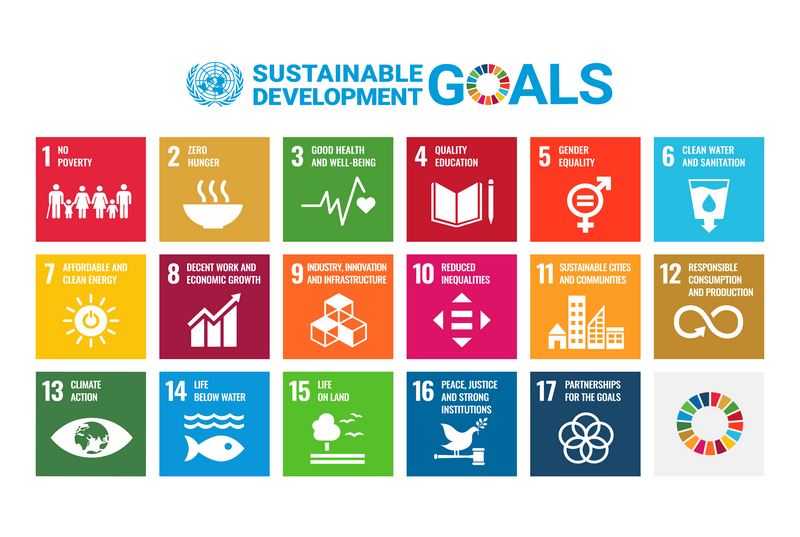
The 2030 Agenda for Sustainable Development, adopted by all United Nations Member States in 2015, provides a shared blueprint for peace and prosperity for people and the planet, now and into the future. 17 Sustainable Development Goals (SDGs) are an urgent call for action by all countries - developed and developing - in a global partnership. They recognize that ending poverty and other deprivations must go hand-in-hand with strategies that improve health and education, reduce inequality, and spur economic growth – all while tackling climate change and working to preserve our oceans and forests.
Members of the Centre Council:
- Assoc. Prof. Ivana Restović, PhD, Head of the Centre
- Prof. Zorana Šuljug Vučica, PhD, Vice-Dean for Teaching and Student Affairs, ex officio member
- Assoc. Prof. Nikša Varezić, PhD, Vice-Dean for Research and International Cooperation
- Josipa Jurić, Lecturer, Deputy Head of the Centre
- Assoc. Prof. Bruno Ćurko, PhD
- Prof. Marita Brčić Kuljiš, PhD
- Assist. Prof. Mila Bulić, PhD
- Prof. Snježana Dobrota, PhD
- Assist. Prof. Marijo Krnić, PhD
- Assist. Prof. Toni Popović, PhD
- Assist. Prof. Ivana Jadrić, PhD
- Assoc. Prof. Dubravka Kuščević, PhD
- Josip Guć, PhD, Senior Assistant