MENU
+385 21 32 92 84

Poljička cesta 35, Split, Croatia

MENU

DEPARTMENT OF ART HISTORY


Head of the Department:
Ana Torlak, PhD, Associate Professor
 
Department Secretary:
Margareta Vukojević, prof.
tel: +385 (021) 545 584

Coordinator for teaching bases:
Kristina Babić Džaja, Senior Lecturer
E-mail: kbabic@ffst.hr
v. d. Frane Prpa, Assistant
E-mail: fprpa@ffst.hr

Website Administrator:
Frane Prpa, Assistant
E-mail: fprpa@ffst.hr
 
Student Services:
tel: +385 (021) 545 542

GENERAL INFORMATION ABOUT THE PROGRAM

Study programme:

University undergraduate study programme

University graduate study programme

General information on the study programme:

The university undergraduate double-major study programme in Art History covers all fundamental content in the field of art history and enables students to develop existing professional competencies and acquire new ones. During the programme, students gain knowledge of artistic and cultural heritage from antiquity to the contemporary period, develop the ability to analyse and interpret works of art, and become familiar with methods of researching and protecting of cultural heritage.

Graduates with a university bachelor’s degree in Art History have the opportunity to work in cultural institutions, museums, galleries, tourism, and in associate positions on projects related to culture and heritage, as well as in occupations requiring knowledge of art history, cultural heritage, and culture in general.

The university undergraduate study programme in Art History is comparable to related programmes in the Republic of Croatia, enabling the smooth mobility of students to similar programmes at other universities in the country and abroad.


The university graduate double-major study programme in Art History enables students to deepen and broaden the knowledge acquired at the undergraduate level and to develop specialised competencies in the field of art history and the protection of cultural heritage. During the programme, students acquire advanced methods of research, critical analysis, and interpretation of works of art and cultural phenomena, with particular emphasis on independent research and an interdisciplinary approach.


Upon completion of the graduate study programme, students acquire competencies for work in museums, galleries, conservation departments, cultural institutions, scientific research projects, schools, tourism, and the media, as well as for positions related to the management, promotion, and interpretation of cultural heritage.


Level of study programme:


University undergraduate study programme


University graduate study programme

Professional or academic title or degree awarded upon completion of the study programme :


University Bachelor (Baccalaureus/Baccalaurea) of Art History
(univ. bacc. hist. art.)


Upisnik studijskih programa Registry of study programmes


University Master of Education in Art History

(univ. mag. educ. hist. art.)


Upisnik studijskih programa Registry of study programmes

Programme duration:

3 years

2 years

Number of ECTS points acquired on completion of study programme:

90

60

Application and Enrolment Requirements:


Detailed information about admission to the study programme is available at the following links:


Postani student


FFST - upisi

For admission to the university graduate double-major study programme in Art History, applicants must have completed an accredited university undergraduate double-major study programme in Art History, earning at least 180 ECTS credits in combination with another double-major undergraduate study programme.

The university graduate study programme in Art History may be combined with all double-major study programmes at the Faculty of Humanities and Social Sciences in Split.


Further study opportunities:

Upon completion of the university undergraduate study programme in Art History, students may continue their studies at this Faculty by enrolling in a university graduate study programme, or in another graduate study programme at this or other faculties and universities in Croatia and abroad, subject to any differences in courses and/or credits arising from the specific features of different programmes, as stipulated by the regulations of the university and/or faculty.


Graduates holding the degree of Master of Education in Art History, by virtue of the competencies, knowledge, and skills acquired, are eligible to enrol in the doctoral study programme in Humanities at our Faculty, within the scientific area of the humanities, in the field of art history and other related fields.


CONTACTS


Name and title

E-mail address

Department Head

Ana Torlak, PhD, Assistant Professor

atorlak@ffst.hr

Secretary

Margareta Vukojević

mvukojev@ffst.hr

ECTS coordinator

Dalibor Prančević, PhD, Associate Professor

dalibor@ffst.hr


EMPLOYEES AND COURSES

Full Professor with Tenure

prof. dr. sc. Ivana Prijatelj Pavičić Email Kabinet Odsjeka

Associate Professor

izv. prof. dr. sc. Vedran Barbarić Email 224A
izv. prof. dr. sc. Ivana Čapeta Rakić Email  
izv. prof. dr. sc. Silva Kalčić Email B222
izv. prof. dr. sc. Dalibor Prančević Email 220
izv. prof. dr. sc. Ana Torlak Email 224a

Assistant Professor

doc. dr. sc. Anđelko Mihanović Email  

Senior Lecturer

v. pred. Kristina Babić Džaja Email  

Assistant

Frane Prpa Email 224A

Senior Lecturer

v. pred. dr. sc. Doroti Brajnov Botić Email  
v. pred. dr. sc. Ita Praničević-Borovac Email  

Others

nasl. doc. dr. sc. Darka Bilić Email  
nasl. doc. dr. sc. Sandi Bulimbašić Email  
nasl. izv. prof. dr. sc. Radoslav Bužančić Email  
Title Semester Program External URL INFO
Art of the 15th and 16th Century 3 undergraduate  
Engleski jezik:
Semestri nastave: 3
Art of the 17th and 18th Century 4 undergraduate  
Engleski jezik:
Semestri nastave: 4
Art of the 19th Century - General Problems and Comparative Studies 4 undergraduate  
Art of the 20th Century - Fundamental Problems and the End of Modernity 5 undergraduate  
Art of the Early Middle Ages 2 undergraduate  
Engleski jezik:
Semestri nastave: 2
Art Pedagogy and Mediation in museums, galleries and extrainstitutional initiatives in the XXth and XXIst century 3 graduate  
Contemporary Art 5 undergraduate  
Engleski jezik:
Semestri nastave: 5
Doctoral Examination 5 doctoral  
Engleski jezik:
Semestri nastave: 5
Fundamentals of Museology and Museum Pedagogy 1 graduate  
Gothic Art 3 undergraduate  
Engleski jezik:
Semestri nastave: 3
Iconology 1 undergraduate  
Engleski jezik:
Semestri nastave: 1
Introduction to Fine Arts 1 undergraduate  
Engleski jezik:
Semestri nastave: 1
MA thesis 4 graduate  
Engleski jezik:
Semestri nastave: 4
Methods of teaching fine arts 3 graduate  
Engleski jezik:
Semestri nastave: 3
Practicum and school practice 4 graduate  
Engleski jezik:
Semestri nastave: 4
Protection of Cultural Heritage 4 undergraduate  
Engleski jezik:
Semestri nastave: 4
Qualifying Research Paper 1 doctoral  
Engleski jezik:
Semestri nastave: 1
Romanesque Art 3 undergraduate  
Engleski jezik:
Semestri nastave: 3
Supervisor-guided Development of The Doctoral Thesis Topic 5 doctoral  
The Art of the Roman Empire in Croatia 2 undergraduate  
Engleski jezik:
Semestri nastave: 2
Theory and History of Design 5 undergraduate  
Engleski jezik:
Semestri nastave: 5
Theory of Visual Arts 6 undergraduate  
Engleski jezik:
Semestri nastave: 6
Third Research Paper of a Higher-Level Complexity 5 doctoral  
Visual Communications 6 undergraduate  
Engleski jezik:
Semestri nastave: 6
Approaches to the interpretation of the relationship between sacral heritage and space in the teaching of fine art 3 graduate  
Artists Schiavoni 3 doctoral  
Engleski jezik:
Semestri nastave: 3
Art of Indigenous Adriatic Communities in the Iron Age 3 doctoral  
Bachelor Thesis 6 undergraduate  
Engleski jezik:
Semestri nastave: 6
Colonia Martia Iulia Valeria Salona Felix 4 doctoral  
English Language I 1 undergraduate  
Engleski jezik:
Semestri nastave: 1
English Language II 2 undergraduate  
Engleski jezik:
Semestri nastave: 2
English Language III 3 undergraduate  
Engleski jezik:
Semestri nastave: 3
English Language IV 4 undergraduate  
Engleski jezik:
Semestri nastave: 4
First Research Paper 2 doctoral  
Engleski jezik:
Semestri nastave: 2
Greek Colonisation of the Eastern Adriatic 3 doctoral  
Iconological Approach to the Work of Art 4 doctoral  
Individual Consultations with the Supervisor for the Purpose of Writing a Research Paper 4 doctoral  
Individual Supervisor-guided Work on the Preparation of the Research Paper 4 doctoral  
Individual Work with the Supervisor (First Research Paper) 2 doctoral  
Individual Work with the Supervisor (Second Research Paper) 3 doctoral  
Intersections of Visual Arts and Literature during the Twentieth Century: Examples from Croatian and Italian Cultural History 2 doctoral  
Italian Language I 1 undergraduate  
Engleski jezik:
Semestri nastave: 1
Italian Language II 2 undergraduate  
Engleski jezik:
Semestri nastave: 2
Italian Language III 3 undergraduate  
Engleski jezik:
Semestri nastave: 3
Italian Language IV 4 undergraduate  
Engleski jezik:
Semestri nastave: 4
Marian Iconography in Dalmatian Painting 4 doctoral  
Master Thesis 4 graduate  
Engleski jezik:
Semestri nastave: 4
Methodology of processing immovable cultural properties - professional approach 5 undergraduate  
Methods of Protection and Conservation of Movable Cultural Heritage 2 graduate  
Museum pedagogy with practicum 3 graduate  
Engleski jezik:
Semestri nastave: 3
On the Wings of Antiquity: Monuments, Representations, Travelogues 1 graduate  
Sculpture and Architecture of the early Medieval Croatian state 3 undergraduate  
Second Research Paper 3 doctoral  
Engleski jezik:
Semestri nastave: 3
Selected Chapters from Early Renaissance Art 3 doctoral  
Selected Chapters in Contemporary Art Theory 1 doctoral  
Selected Topics in Ancient Art 3 graduate  
Engleski jezik:
Semestri nastave: 3
The Art-History Workshop 1 1 graduate  
Engleski jezik:
Semestri nastave: 1
The Art-History Workshop 2 2 graduate  
Engleski jezik:
Semestri nastave: 2
The Art-History Workshop 3 3 graduate  
Engleski jezik:
Semestri nastave: 3
The History of Exhibiting and Art through Contemporary Exhibition Practices 2 graduate  
The Sacralisation of Landscape 4 doctoral  
Engleski jezik:
Semestri nastave: 4
The urbanism of the mediaeval communes 4 undergraduate  
Engleski jezik:
Semestri nastave: 4
Topics in Medieval Art 2 graduate  
Engleski jezik:
Semestri nastave: 2
Traditional games and toys 2 graduate  
Engleski jezik:
Semestri nastave: 2
Urbanistic Topics 2 graduate  
Engleski jezik:
Semestri nastave: 2
Venice as Patron of Urban and Architectural Development in the Eastern Adriatic during the Early Modern Period 3 graduate  

Documents

Repository is empty

Repository

News

10.07.2026
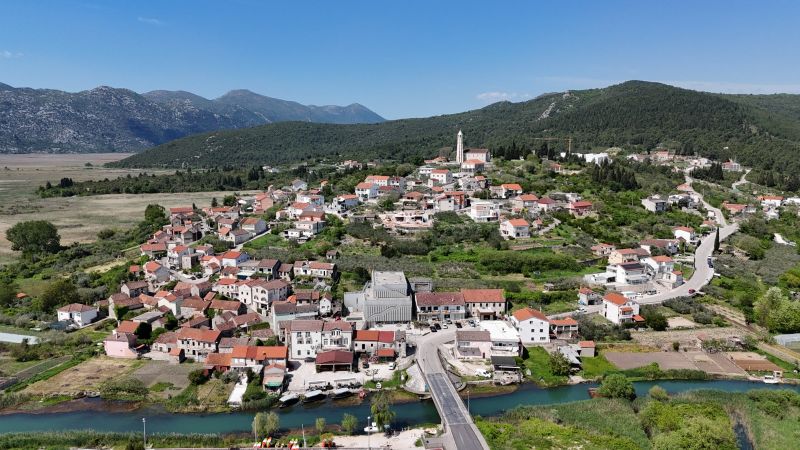
In mid-April, students of History and Art History participated in a field study visit to Vid, near Metković. As part of the field-based learning programme, they visited the Narona Archaeological Museum and explored the archaeological remains of the ancient Roman city of Narona. The visit provided students with the opportunity to engage directly with the site's archaeological and cultural heritage, thereby enhancing their understanding of the historical and material evidence of the Roman period in the eastern Adriatic.
10.07.2026
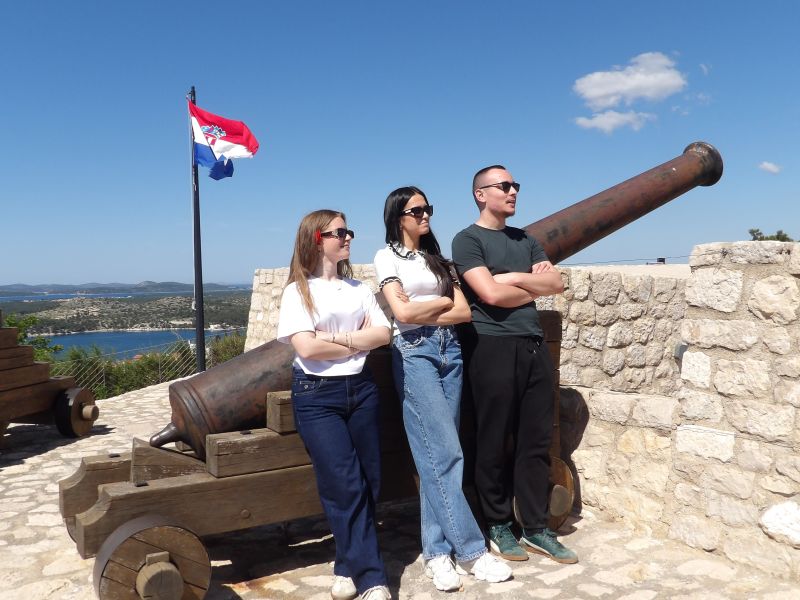
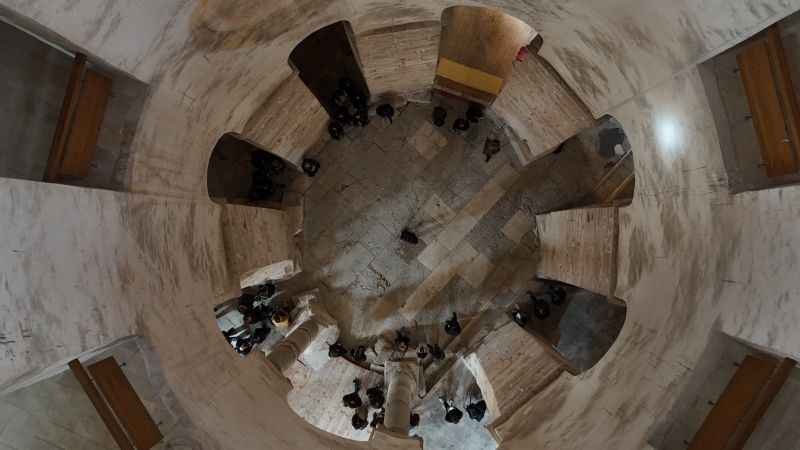
First-year students of History and Art History participated in a field study visit to the historic cities of Zadar and Nin, where they explored their rich cultural and historical heritage. The programme included visits to major heritage sites, ranging from the Church of St Donatus to the Museum of Nin Antiquities, providing students with first-hand insight into the archaeological, architectural, and artistic legacy of the region. The field study was conducted under the guidance of Associate Professor Ana Torlak, PhD, Associate Professor Vedran Barbarić, PhD, Senior Teaching and Research Assistant Zvonimir Forker, and Teaching and Research Assistant Frane Prpa.  
10.07.2026
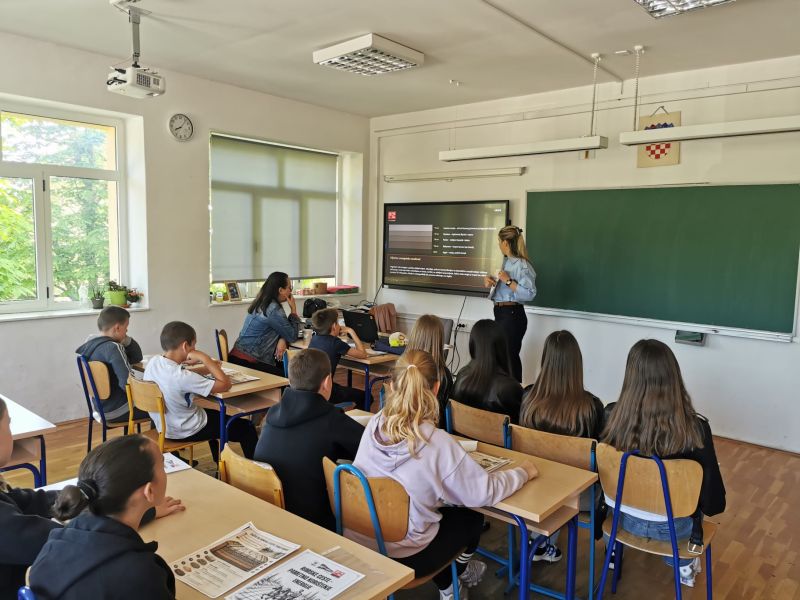
The lecture Roman Roads – An Example of Intelligent Energy Use was delivered as an interactive presentation supported by a PowerPoint slideshow, with particular emphasis on the active participation of attendees. The primary objective of the activity was to introduce children to the concept of rational and sustainable energy use through a historical case study, while encouraging critical reflection on contemporary approaches to the utilisation of energy resources. In addition to the theoretical component, participants took part in a workshop during which they engaged in discussion, expressed their views, and related the acquired knowledge to their own everyday experiences. Particular emphasis was placed on experiential learning and practical application. Pupils completed a series of tasks using specially designed worksheets that were developed and adapted to their age group and level of prior knowledge. The worksheets included reading comprehension exercises, concept-matching activities, and problem-solving tasks focusing on energy conservation and the efficient use of energy resources. Through these activities, participants strengthened their logical reasoning, collaborative skills, and independent critical thinking. Alongside raising awareness of the importance of responsible environmental stewardship, the activity also incorporated elements of cultural heritage education, with particular emphasis on the Roman road that has been preserved in the immediate vicinity of the school. As the children are already familiar with this archaeological site and frequently encounter its remains, the local heritage context significantly enhanced their understanding of the topic and enabled them to connect the educational content with their immediate environment. The interactive teaching approach, together with the combination of diverse pedagogical methods, proved highly effective in fostering participants' engagement and motivation. Overall, the activity successfully contributed to raising awareness of the importance of responsible energy use, environmental sustainability, and the value of local cultural heritage while promoting active learning and critical thinking.
10.07.2026
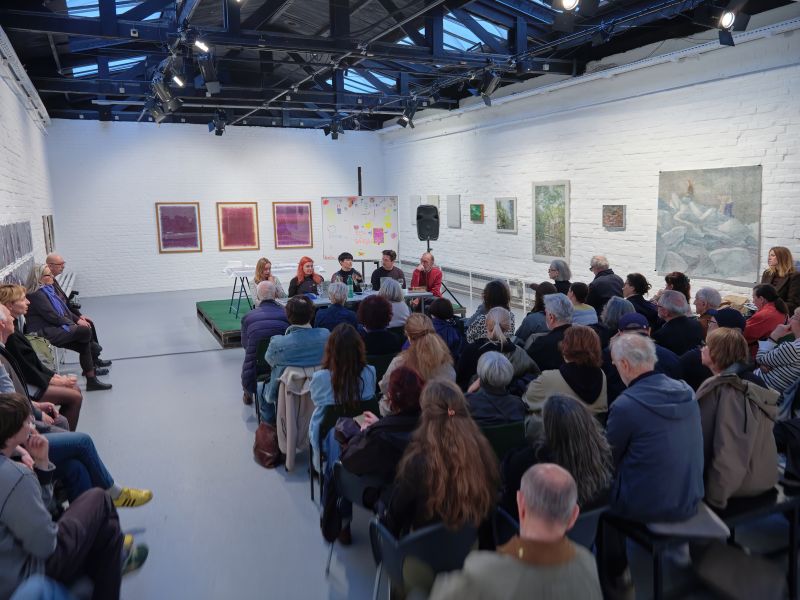
  On Tuesday, 21 April 2026, at 7:00 p.m., the Gallery of the Student Centre in Zagreb hosted the presentation of Exhibition Cartographies of Želimir Koščević: Critical Instruments, Exhibition and Curatorial Narratives , a new monograph by Associate Professor Silva Kalčić, PhD. The publication was presented by Janka Vukmir, President of the Croatian Section of AICA; Suzana Marjanić, editor of the volume; Ivana Bago, contemporary art theorist; Zlatko Galić, author of the foreword written from the perspective of a former student; Želimir Koščević; and the author herself. The Gallery of the Student Centre was not chosen as the venue by chance. It was here that Želimir Koščević, serving as director of the Gallery between 1966 and 1979, fundamentally transformed the understanding and role of curatorial practice in Croatia, aligning it with the most progressive international developments of the period. The book launch took place within the exhibition of Milivoj Bijelić, an artist who had participated in Koščević's major international exhibition Cartographers ( Kartografi ), organised by the Museum of Contemporary Art in Zagreb in 1997. Silva Kalčić's book represents an attempt to historicise curatorial practice in contemporary Croatian art through the example of the long-standing work of curator Želimir Koščević. As director and curator of the Gallery of the Student Centre in Zagreb—originally constructed as the pavilion of the Kingdom of Serbs, Croats and Slovenes at the Zagreb Fair (1928–1929) according to the design of architect Ivan Zemljak, a member of the Zemlja Group—Koščević subsequently continued his curatorial career at the Gallery/Museum of Contemporary Art in Zagreb and later at the Lang Photo Gallery in Samobor. It is important to emphasise that the history of curatorial practice remains a relatively underexplored field within Croatian art history, whereas internationally it has become an increasingly significant area of scholarly inquiry. While the history of exhibitions in the modern sense—as a manifestation of the public sphere and the universal right to public visibility—can be traced back to the revolutionary transformations of the late eighteenth century, the history of contemporary curatorial exhibitions is still being actively constituted today. This ongoing process invites critical reflection on institutional policies, exhibition formats, interpretative frameworks, and models of presentation. Following the Rijeka Salon of 1954, which introduced the influential and authoritative figure of the curator responsible for selecting works for the salon exhibition—a development discussed by Zlatko Galić in the book's foreword—the emergence of the neo-avant-garde together with institutional critique during the 1950s and 1960s profoundly challenged established understandings of the artist, the artwork, the curator, and the audience. These developments led to a more active curatorial role in mediating new artistic practices, culminating in the authorship of thematic exhibitions, exhibition-statements, and ultimately in the radical questioning—and, at times, the dissolution—of the curatorial position itself. Such tendencies are exemplified by Koščević's exhibitions Imaginary Museum I–III (1966–1968), Exhibitions of Women and Men (1971), Mail Shipments (1972), and ultimately the major international exhibition Cartographers: Geo-Gnostic Projections for the Twenty-First Century (1997). When curators of Koščević's generation—he was born in Zagreb in 1939—entered the cultural field, they redefined their professional role to such an extent that they assumed the position of meta-artists, a development widely recognised as the curatorial turn . Rather than relying on linear museological narratives, Koščević employed artistic methodologies within curatorial practice, treating exhibition design, museum displays, and artefacts themselves as creative material, experimenting with modes of perception, and conceiving exhibitions as integrated experiential environments. Under Koščević's direction, the Gallery of the Student Centre became an experimental and open laboratory for deprofessionalised artistic practice. Subsequently, he extended artistic activity into the public space of the city, thereby contributing to the deinstitutionalisation of art. Alongside experimental, critical, and participatory exhibitions, he organised public discussions and debates, while actively cultivating audiences through the Gallery's educational programmes and later through those of the Gallery/Museum of Contemporary Art. The book was co-published by the Croatian Section of AICA and Durieux (Zagreb, 2026). Editor: Suzana Marjanić, PhD, Senior Research Associate Peer reviewers: Professor Sonja Briski Uzelac, PhD, and Professor Krešimir Purgar, PhD Language editor: Maja Trinajstić Design and graphic layout: Petra Milički Publication details 445 pages 15 × 21 cm Hardcover ISBN 978-953-50937-0-1 (Croatian Section of AICA) ISBN 978-953-188-609-3 (Durieux) The publication was produced with the financial support of the City of Zagreb and the Ministry of Science, Education and Youth of the Republic of Croatia.  
25.06.2026
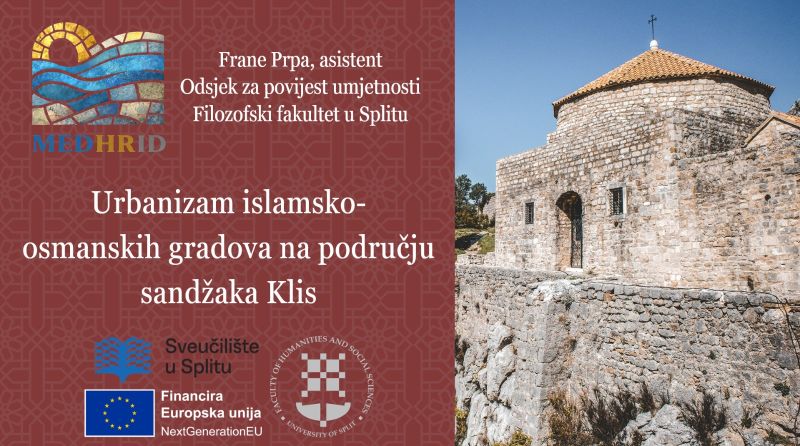
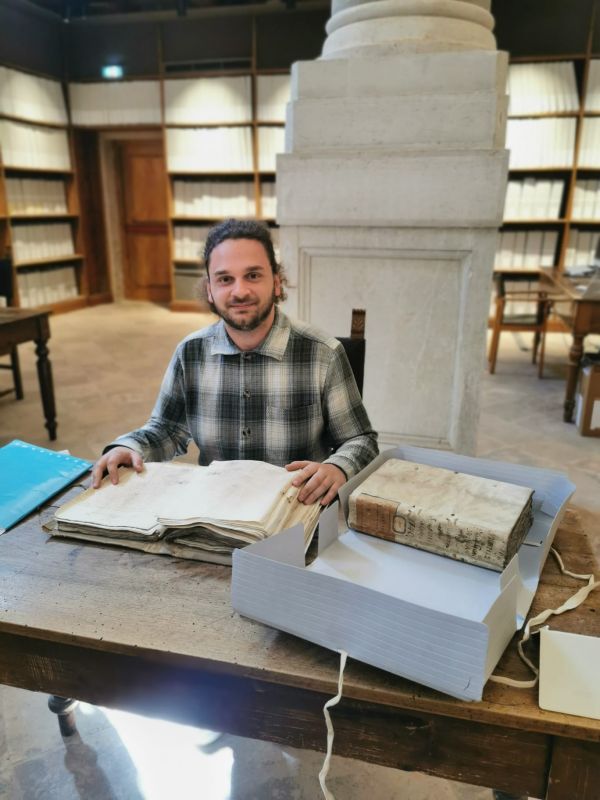
  As part of the project "Mediterranean – Croatia – Identity: Historical and Cultural Intertwinings (MEDHRID)" , Assistant Frane Prpa from the Department of Art History at the Faculty of Humanities and Social Sciences, University of Split, undertook a research stay in Venice from 19 February to 19 March 2026. During his one-month stay in Venice, Assistant Frane Prpa conducted archival research at four institutions: Archivio di Stato di Venezia , Biblioteca Nazionale Marciana , Museo Correr , and Fondazione Querini Stampalia .  
25.06.2026
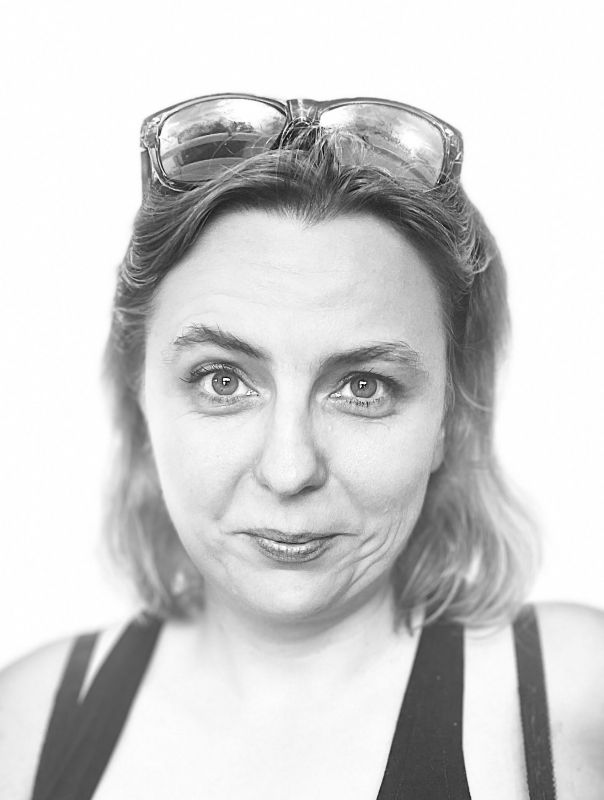
On 31 March 2026, a guest lecture by Małgorzata Kaźmierczak , current President of the International Association of Art Critics (AICA) and Assistant Professor in the Art and Design Programme in Kraków, was held at the Faculty of Humanities and Social Sciences, University of Split. The lecture focused on the theory of preservation and documentation of performance art and was delivered as part of the course Theory of Visual Arts , taught by Silva Kalčić . Małgorzata Kaźmierczak (The Faculty of Humanities, Institute of Art and Design of the Pedagogical University of Krakow, Poland): The theory of the preservation and documentation of performance art   The lecture considers the contingency of performance art documentation: how an accidentally acquired image or deliberately created documentation influence our memory of performance art events and create a fictional action which exists only in our imagination. The problem will be illustrated with examples of widely known iconic performances are used, as well as primary sources, such as interviews with artists and documentalists. It also analyzes whether technological improvements change the contingent and fictional nature of documentation. It analyzes the problem from the perspective of a researcher, as well as a person who has documented hundreds of performance art pieces. --- Małgorzata Kaźmierczak Ph.D. A historian, curator, and researcher of contemporary art. Her interests focus on performance art and its social and political contexts, particularly the relationship between artistic practice and freedom of expression. She explores mechanisms of censorship, strategies of artistic resistance, and the role of art criticism in shaping public discourse. An important area of her research is South American performance art, analyzed through the lens of memory, corporeality, violence, and democratization processes. She is also interested in the transformations of the art field after 1989 in Central and Eastern Europe and the functioning of transnational artistic and institutional networks. Her research is closely linked to her curatorial practice and experience as a director. She carries out exhibition projects and international collaborations, combining theoretical reflection with institutional action. As president of the International Association of Art Critics (AICA International), she is committed to developing global initiatives promoting artistic freedom of expression, the ethics of criticism, and intercultural dialogue.  
25.06.2026
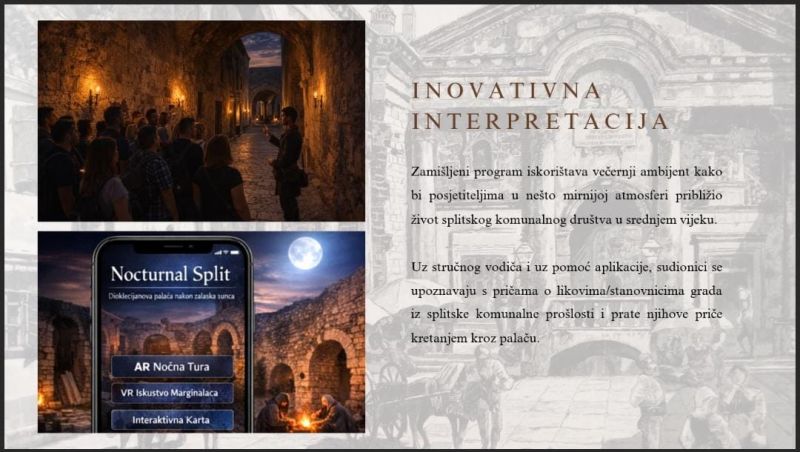
  Art History students Anđela Prodan and Anja Jenjić will participate in the 12th International Congress of Historic Towns, which will take place from 24 to 27 March 2026 at Hotel President in Solin. As part of the congress programme, which includes lectures, panel discussions, and presentations dedicated to cultural tourism and heritage interpretation, a presentation of the best student innovative idea for the interpretation of a cultural heritage site will also be held. Within this programme, the students presented their interpretation project entitled: “Diocletian’s Palace After Sunset: The Lives of Communal Marginalised Groups.” The project focuses on portraying the everyday lives of marginalised social groups during the medieval communal period, with the aim of offering a different perspective on the interpretation of the city's history and enriching the contemporary cultural and tourism offer of Split’s historic centre.  
25.06.2026
Želimir Koščević’s Exhibition Cartographies is an attempt to historicise curatorial practice in contemporary art in Croatia through the example of the work of curator emeritus Želimir Koščević. He worked progressively as the director and curator of the Student Centre Gallery in Zagreb (originally built as the Pavilion of the Kingdom of Serbs, Croats and Slovenes at the Zagreb Fair in 1928–1929, designed by Ivan Zemljak, a member of the Zemlja group), and later as a curator at the Gallery/Museum of Contemporary Art in Zagreb (as well as the Lang Photo Gallery in Samobor). It is important to emphasise that the history of curatorial practices remains a relatively under-researched field within the Croatian art-historical context, while internationally it has become an increasingly prominent area of inquiry. While the history of exhibitions, in the modern sense of the universal right to public visibility, can be traced back to the revolutionary upheavals of the late eighteenth century, the history of contemporary curatorial exhibitions is being written in the present. This opens up possibilities for questioning existing models of institutional policy, conceptual frameworks, and modes of presentation. Following the Rijeka Salon ’54, which introduced the powerful and authoritative figure of the curator as selector of exhibited works (as discussed by Zlatko Galić in his introductory text), the emergence of neo-avant-garde practices and institutional theory and critique in the 1950s and 1960s destabilised established meanings and institutional positions associated with the artist, the artwork, the curator, and the audience. This led to a more active role for curators in mediating new artistic expressions—from the authorship of thematic exhibitions and exhibition-statements to the radical questioning and eventual abolition of the curatorial position itself. Examples include Koščević’s exhibitions Imaginary Museum I–III (1966–1968), Exhibitions of Women and Men (1971), Mail Art (1972), and culminating in the major international exhibition Cartographers: Geo-Gnostic Projections for the 21st Century (1997). When curators of Koščević’s generation (he was born in Zagreb in 1939) emerged on the scene, they redefined their own professional position and effectively assumed the role of meta-artists. This phenomenon became known as the curatorial turn . Rather than relying on linear museological narratives, Koščević employed artistic methods within his curatorial practice, using exhibition displays and museum artefacts as creative material, experimenting with modes of viewing, and conceiving exhibitions as holistic experiences. Koščević transformed the Student Centre Gallery into an experimental and open workshop of deprofessionalised art and subsequently introduced art into the public space of the city, thereby de-institutionalising it. Alongside experimental, critical, and interactive exhibitions, he organised public talks and discussions and actively mobilised and educated audiences through the pedagogical programmes of the Student Centre Gallery and later the Gallery of Contemporary Art.  
25.06.2026
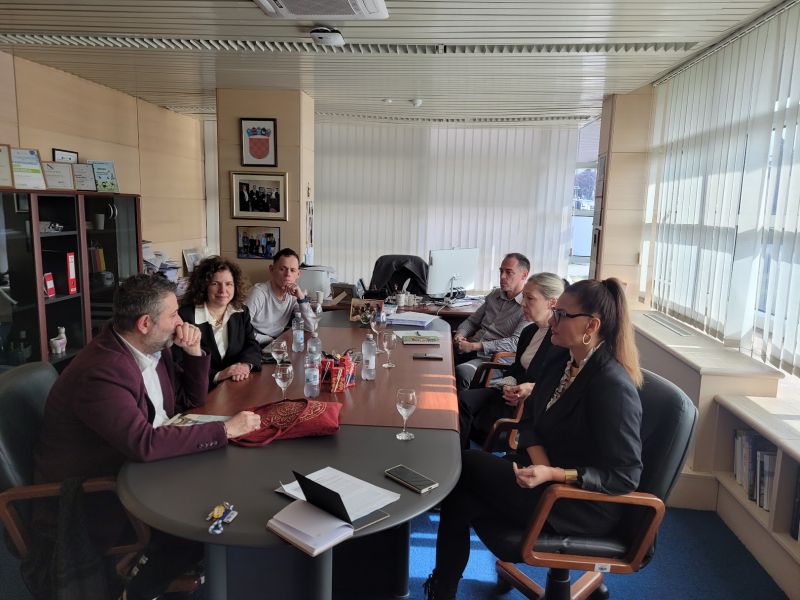
  During February 2026, the Faculty of Humanities and Social Sciences in Split successfully completed the first month of incoming mobility for international researchers within the framework of the CIRCE project. The Faculty hosted researchers from Italy and Spain who carried out an intensive and multidisciplinary programme in Split and Istria dedicated to the mapping and interpretation of contested cultural heritage. The researchers’ stay in Split was coordinated by Associate Professor Ivana Čapeta Rakić, PhD, leader of one of the project’s work packages. The activities were implemented in cooperation with the Croatian Association of Visual Artists Split (HULU Split). The mobility programme included extensive field research in numerous locations across Istria (Lovran, Oprtalj, Vižinada, Pula, Beram, Lindar, Pazin, Rovinj, Svetvinčenat, and Hum), as well as in Split and its surroundings (Klis and Trogir). Researchers mapped examples of potentially contested heritage, analysed different narratives and contexts, and collected data for the development of a shared cataloguing methodology. Fieldwork included visits to museums and galleries, as well as collaboration with local experts and representatives of religious communities. Particular emphasis was placed on participatory research methods. Focus groups, meetings with representatives of the Jewish and Islamic communities, and participatory mapping activities were organised, ultimately leading to the implementation of the Decolonial Walk—an event aimed at fostering critical reflection on cultural heritage and its multilayered history. The mobility programme also included a series of professional meetings and presentations, notably the presentation of the project at the Centre for Iconographic Studies of the Faculty of Humanities and Social Sciences in Rijeka, as well as a meeting with the head of the House of Frescoes in Draguć, a department of the Historical and Maritime Museum of Istria in Pula dedicated to the preservation and presentation of Istrian mural painting. In addition to the research component, the mobility included numerous project meetings, networking activities, and participation in cultural events, further strengthening international cooperation among project partners and enhancing the visibility of the project.