Ovo web sjedište koristi tehnologiju "kolačića" (eng. cookie) da bi se korisnicima prikazao dinamičan i personaliziran sadržaj, te su oni nužni za ispravan rad. Ako nastavite pregledavati ove stranice, kolačići će biti korišteni u suradnji s vašim preglednikom Weba.
Mediterranean Crossings: A Studia Mediterranea Conference
Location: The Faculty of Humanities and Social Sciences Split, Croatia
Dates: September 19-20, 2025
Abstract submission date: June 25, 2025
Keynote speaker (virtual): Anna Kornbluh (University of Illinois at Chicago)
*note: this is a hybrid conference, but there will be no recording and the conference is only
open to registered participants
Despite Fernand Braudel’s much-quoted statement that, for the historian, the character of the
Mediterranean “is complex, awkward, and unique. It cannot be contained within our
measurements and classifications,” the sea has often been read in terms of interconnection and
similarity. John Watkins, in an issue of Mediterranean Studies from 2014, discusses a shift in
the field from acting as a “mediator” between scholarly work from the Cold War and that of
Global studies in the 1990s, to a focus on globalization, with newer studies having an
“emphasis on the region as a whole rather than on the histories of individual states within the
region.” A more recent example of the trend of connection can be found in the introduction to
Angela Biancofiore and Clément Barniaudy’s 2022 collection Re-storying Mediterranean
Worlds, which asks the reader to frame the following essays by thinking “of Mediterranean
worlds as interconnected worlds.” In a wider context, this thinking belongs to what Anna
Kornbluh has identified as the "too-late capitalist" style of "immediacy," in which being
absorbed in a text through immersion in an intense personal experience invites too-easy forms
of identification which work against critical forms of thinking, or what she terms mediation (in
contrast to Watkins, quoted above), which can be more focused on difference rather than
similarity.
This conference, while still taking globalization seriously, aims to focus on the differences that
are essential to the Mediterranean Sea. This reflects the “complex of seas” that are “piled one
above the other” in Braudel’s quote, which stresses a gathering of otherness, not only on a
representation of immediate connectedness. In this sense, the conference aims to be closer to
what the late Inoslav Bešker wrote on the subject in his Mediterranean in Literature, in which
the real differences of the various people belonging to the Mediterranean region and its isolated
parts are only seen as coherent when represented within the imagination of others. The
conference aims to develop various textual strategies, taken in the largest sense, for
representing separation and connection together, which is an important strategy for the critical
mediation needed for representing the Mediterranean as a complex system rather than a
flattening whole.
In short, as Braudel has said, “The Mediterranean is not even a single sea, it is a complex of
seas; and these seas are broken up by islands, interrupted by peninsulas, ringed by intricate
coastlines.” It is just this broken, complex, interrupted landscape that the conference
Mediterranean Crossings aims to address.
The conference welcomes contributions from a theoretical perspective, as well as those that
address issues in literature, media, the arts, and other cultural studies.
The conference especially welcomes students and young scholars, and there will be a
special section of the conference for such participants open to all research topics.
(CFP adapted from Brian Willems, "Editorial Introduction: Mediterranean Literary Studies," Anafora 11, No.2
(2024)).
Please submit abstracts of a maximum 300 words to bwillems@ffst.hr by May 25, 2025, with
a short biographical note
Conference fees: 75 Euros for in-person attendance (fully employed)
50 Euros for students and the not fully employed in-person
40 Euros for virtual participation
This conference is organized by the Studia Mediterranea center of the Faculty of Humanities
and Social Sciences of the University of Split, Croatia.
15.05., 12.15-13.00, P28, Prezentacija knjige: autorica Prof. Rebekah Modrak (University of Michigan, Ann Arbor), knjiga: Arijana Lekić-Fridrih: All Art is a Political Statement; moderator Prof Brian Willems
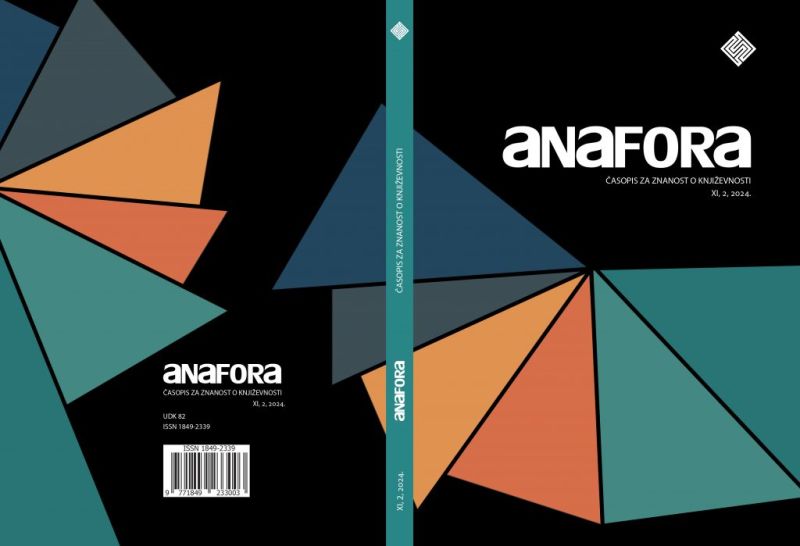
A special issue of Anafora on the topic of Mediterranean Literary Studies, edited by Brian Willems, and based on presentations from the 2023 SMED conference at the Facutly of Humantities and Social Sciences, Univeristy of Split
The Studia Mediterranea center is happy to announce the publication of Psychoanalysis Between Philosophy and Politics, edited by Nicol Barria-Asenjo and Slavoj Žižek, published by LOOK, in collaboration with the Multimedia Center Split and the Faculty of Humanities and Social Sciences, Split. Along with the university's Center for Cross-Cultural and Korean Studies, SMED is happy to be a co-sponsor of this publication.
An open-access pdf of the publication is available here .
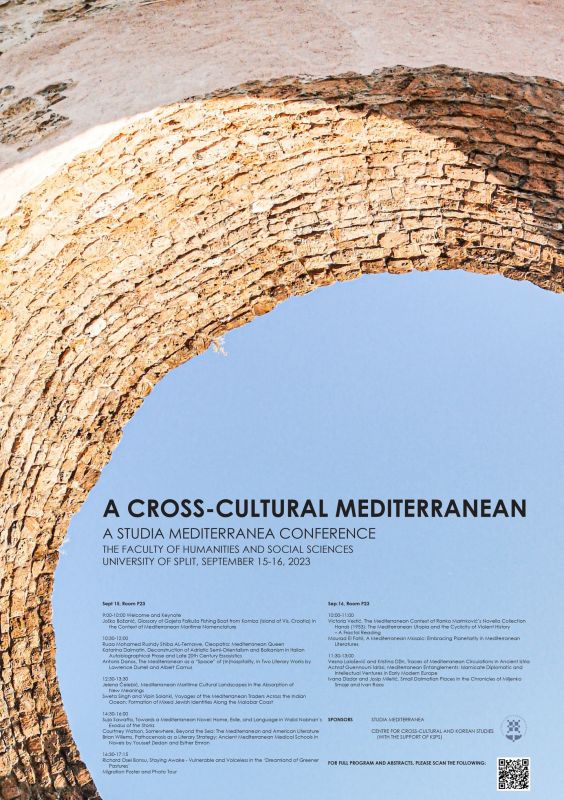
We are pleased to announce the A Cross-Cultural Mediterranean: The 2023 Studia Mediterranea Conference, to be held in-person on September 15-16, 2023, at the Faculty of Humanities and Social Sciences, University of Split, Croatia. This interdisciplinary conference is held by the Studia Mediterranea Centre, along with support from the Centre for Cross-Cultural and Korean Studies. The conference aims to explore the cultural, historical, and artistic connections and exchanges across the Mediterranean region and their connection with the world beyond.
The Mediterranean has been a hub of cultural exchange for centuries, connecting people from diverse backgrounds through trade, migration, and conflict. This conference seeks to examine the ways in which these interactions have shaped the Mediterranean region, from the ancient world to the present day.
We welcome proposals for papers from scholars in all humanities disciplines, including but not limited to history, literature, art history, archeology, philosophy, and cultural studies. Possible topics of interest include:
The role of the Mediterranean in shaping the cultural identities of societies around its shores
The impact of cross-cultural exchanges on art, literature, and other forms of cultural production
The significance of migration and diaspora in shaping the cultural landscape of the Mediterranean region
The relationship between religion and culture in Mediterranean societies
The influence of colonialism and imperialism on the Mediterranean world
We encourage submissions that draw on important theories and concepts from the humanities, such as postcolonial theory, feminism, cultural studies, and globalization studies, among others, with a special interest in supporting diverse contributions.
Please submit an abstract of no more than 300 words, along with a brief biography, to Brian Willems, bwillems@ffst.hr, by July 1st, 2023. All submissions will be reviewed by the conference organizing committee and accepted papers will be notified by July 20th, 2023. There will be a small conference fee of 20 Euros for students, and 40 Euros for other presenters. Those attending the conference dinner may be asked to provide a small contribution.
Selected papers will be published in the Cross-Cultural Studies Review .
We look forward to hosting a dynamic and engaging conference that will contribute to a better understanding of the rich cultural history and changing nature of the Mediterranean region.



 021 32 92 84
 Poljička cesta 35, Split
 INTRANET
 WEBMAIL
 Pristupačnost